


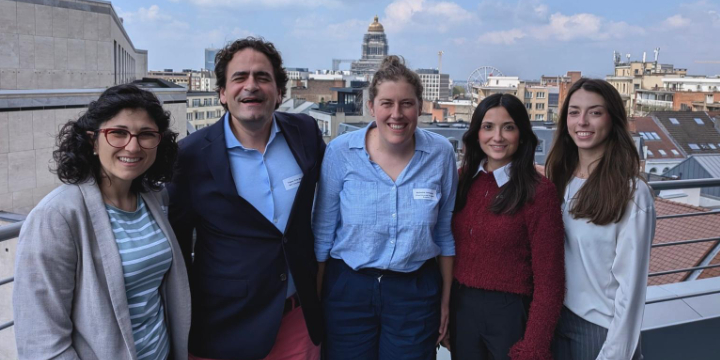
Brussels, 21 April 2026 – FEMAC took part yesterday in Brussels in the Annual Event of the AgriFood Pact for Skills, a European event focused on one of the major challenges of the agri-food sector: how to ensure the skills needed for the future of the sector.
The meeting brought together representatives from the European Commission, European projects, universities, companies and sector organisations to reflect on generational renewal, training, cooperation between stakeholders and the need to bring European strategies down to national and regional levels.
The session highlighted that skills have become a central pillar of European policy, not only for training but also for competitiveness, innovation and the resilience of the agri-food sector. In this context, initiatives such as the Pact for Skills and the Union of Skills are gaining importance as tools to coordinate stakeholders and reduce existing fragmentation.
One of the most prominent topics was generational renewal in European agriculture. It was recalled that only 12% of EU farmers are under 40 years old, while 33% are over 65, with particularly low representation of young women in the sector. This situation reinforces the need to act not only on access to finance or land, but also on knowledge, innovation and skills development.
Another key topic during the event was the need to move from strategy to action. Several speakers stressed that the Pact for Skills will only have a real impact if it is translated into national and regional partnerships, connected to the specific needs of local actors.
It was also emphasised that European projects are useful to trigger change, but often face a clear limitation: time. Therefore, the importance of creating mechanisms to ensure continuity of results was highlighted, strengthening cooperation between business, education and research, and building more sustainable long-term models.
In the session dedicated to European projects and training pathways, reflections closely aligned with the sector’s reality were shared: farmers often do not have time for conventional training, formats need to be more practical and flexible, and content must be adapted to linguistic and territorial contexts.
Tools such as micro-credentials, co-creation approaches with farmers and advisors, and the potential of artificial intelligence to identify skills gaps and better tailor training content were also highlighted.
For FEMAC, this participation has been particularly relevant in identifying European trends and strengthening its role as a bridge between European strategies and local needs. The event confirms that there is room to contribute to the deployment of skills initiatives at a regional level, connecting companies, training centers, and the innovation ecosystem.
In this regard, the current European framework opens up clear opportunities for initiatives such as the European project in which FEMAC participates, AGRIFOOD4FUTURE, to position themselves as valuable actors in translating these European priorities into the Catalan context and generating real impact on the sector.